
|
BY JOHN L. BOOS-N.S.C.A-C.P.T, L.M.T
As the average American matures, the onset of Type 2 Diabetes
Mellitus increases dramatically. For men and women alike, it
seems to spiral up from the age of 30. Women have a higher incidence
of adult onset diabetes. This higher incidence in women is due
to two factors. One factor is gender related while the other
factor is self induced, due to weight management marketing gimmicks
and lifestyle. Never the less, sugar intolerance can be a part
of the aging process.
With advanced age, the body gradually loses the ability to take
up and productively use sugar from the bloodstream. Like high
blood pressure, there are no symptoms until it becomes a major
problem. As the average American slows down, exercises less
and becomes more inactive, there is an increase in body fat
and a loss of muscle tissue (sounds a lot like the youth of
America as well).
With the induction of weight loss diets that encourage high
fat and high protein foods that severely reduce carbohydrates,
an acceleration in the loss of muscle tissue occurs. This is
because the main fuel source of the brain (the metabolic regulating
system) is blood sugar. Fat is a very poor fuel substitute for
the brain but muscle tissue isn’t.
Fat can’t be converted to sugar (blood sugar), but muscle
tissue can. The process of muscle tissue reduction is sped with
the “fat diet” process of reduced carbohydrates.
This is where the greatest weight loss occurs--in the combined
loss of fat, muscle and water. The bummer here is that muscle
loss (sarcopenia) eventually increases the storage of body fat
and reduces the muscles sensitivity to insulin.
Let’s take a look at what is taking place. Muscle tissue
is the main user of blood sugar (about 70% of the available
amount). The less we use this muscle tissue, the less the muscle
will take up the blood sugar (blood sugar intolerance). The
greater the blood sugar intolerance, the more sugar in the blood.
The more blood sugar, the more insulin needed to be pumped out
from the pancreas beta cells. Unlike most other cells in the
body, they can eventually burn out from overuse leaving people
with an impaired ability to manufacture insulin anymore. This
condition is called “adult-onset diabetes.”
According to studies by Dr. James W. Anderson of the University
of Kentucky, a diet low in fat and high in fibrous carbohydrates
has the opposite effect. It can increase muscle cell sensitivity
to insulin within two weeks. The effect was even greater when
combined with regular workouts. The research further indicated
that doing strength-building exercises can increase the capacity
of the muscle even more.
The book Bio-Markers, by Tufts University’s Dr. Bill Evans
states, “strength-building exercise is a key to regulating
glucose metabolism.” This is true, even when body fat
is not lowered according to the same publication. In most cases,
if not all, the proper low fat-high fibrous carbohydrate diet
with muscle building exercise will lower body fat. A low fat-high
fibrous carbohydrate diet will cause an increase in lean (muscle)
tissue to body fat ratio. This kind of ratio will increase blood
sugar uptake.
Studies are one thing, but I’ve personally witnessed these
results numerous times. Most recent has been a relatively new
client, Josie, who dieted herself with low carbohydrate diets
and no strength-building exercises. With this lifestyle, she
gradually lost a great deal of muscle tissue. This contributed
to her eventual diabetes. Her blood sugar was 450 after her
initial visit to her doctor (70- 100 mg. before breakfast being
normal). Her doctor prescribed medication which brought her
blood sugar down to 170.
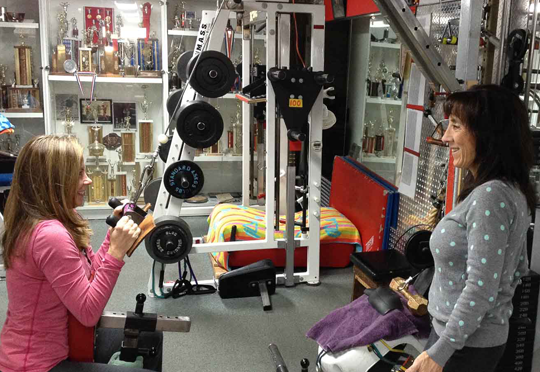
Josie decided to further address the situation. She wanted to
give weight training a serious try. Her health was becoming
a big concern and she wasn’t getting any younger (she
is 58 years old). I recommended a twice a week program.
To make a long story short, let me just say that after 4 months
of dedicated training, her blood sugar is under 100, her energy
level is much higher, she can now ride a bike again (one of
her goals) and she lost 37 pounds. What does this prove? It
proves that the studies are correct. Josie must still take her
medication, but it’s nice to know that health doesn’t
stop at the doctor’s office.
We all have the ability to empower ourselves and take charge
of our well being. Thanks to modern medicine and good old proper
exercise, Josie has her diabetes under control and is a renewed
person. How sweet it is!!
|