
|
DOES EXERCISE REALLY KEEP US HEALTHY AND THINNER?
By John L. Boos, L.M.T., N.S.C.A.,C.P.T.
“Does Exercise Really Keep Us Healthy?” is the catchy title of an article in the New York Times Magazine (Sunday, Aug. 9, 2009). It broadcast a negative tone, as if people who exercise are wasting their time with more hope than reality. Around the same time (Aug. 17, 2009), Time Magazine released an article titled, “Why Exercise Won’t Make You Thin.” It claims that exercise can make you hungry, so many people eat more after going to the gym.
Both magazines are obviously struggling to stay on the newsstand. At one time, they were both respected publications, supplying information without resorting to publication shock tactics to get you to read them. YES – “Times, they are a-changing.”
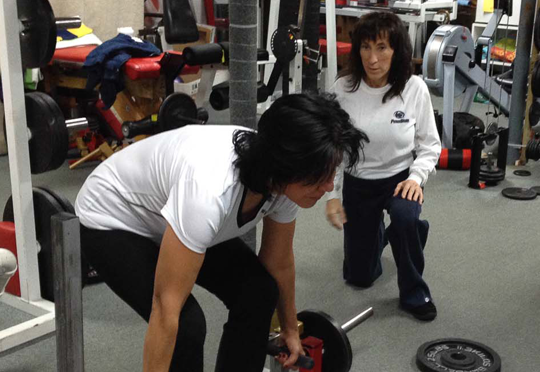
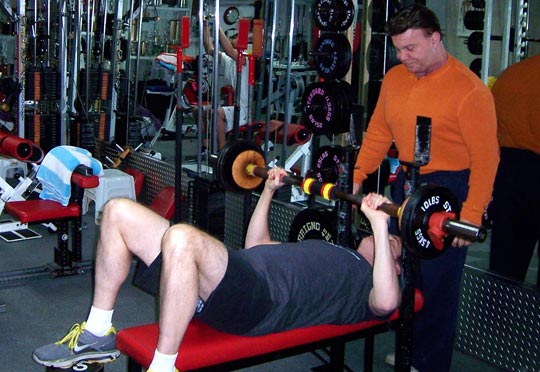
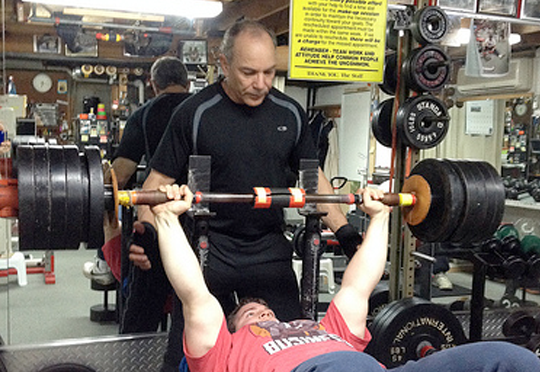
Let me try my best to address both of these desperate attempts to give the public reason to pull it back in the gym. I am a reporter on strength, health, and fitness matters with 48 years of passion for physical culture and human health. (I started my journey back in 1961 as a young boy. Please check my website Boosworld.com for credentials). Let me start with article #1 – Does exercise really keep us healthy? I could end it right here with a big bold ‘YES’, a no-brainer, and that would be the end of it. However, consider their research on diabetes, osteoporosis, cancer and heart disease. As a medical/orthopedic exercise specialist, I read vast amounts of studies. In many of these studies, I feel that the form of exercise used, as well as the food regimen employed, was less than adequate. In working one on one with my clients (staff included), the success rate is far more attainable. It is not an easy task to try to control an exercise study with hundreds of participants in order to acquire accurate results. Secondly, this article states that exercise does indeed improve health in all the pathologies mentioned. The only shortcoming was that exercise alone did little to reduce body weight. Dieting was necessary in conjunction with exercise. To me, the food you use in the exercise program is paramount to achieving positive results. A personal footnote: I never encourage dieting, per se. I educate people on food choices and food timing. Finally, the article’s exercise physiologist was not very effective in producing an increase in muscle mass in 12 weeks. So much for group programs! Our one on one is significantly more effective.
The title of article #2, “Why Exercise Won’t Make You Thin”, is another attempt to get you to buy their dying magazine. Time Magazine has stooped to a new low. No common sense, experienced, and reputable exercise specialist would say thinness can be obtained from proper exercise alone. The author of the article, John Cloud, appears to be a typical, disillusioned, uneducated dreamer. Eating after exercising should not be looked at as a reward. Eating after exercising needs to be looked at as a nutritional responsibility towards the desired result for the intended goal. Exercise alone produces fat loss no greater than earning a college education alone produces a good income. Overeating the spent exercise calories will have little positive effect. This is obvious, even to the less educated. As far as increasing one’s hunger, Mr. Cloud should have done more homework. While hunger can be increased with exercise, it’s the type of exercise you do that can affect appetite. Studies have shown that short term high intensity exercise, such as anaerobic weight lifting, does not increase appetite levels in the way that lower intensity, but longer interval exercise does (being able to do the “talk test” as you are walking, jogging or biking for more than 2 hours at a time). Personally, I find my training to have little effect on my desire to eat more. Also, the researcher should investigate whether the people in the study ever dieted prior to the study, i.e., cycle dieting, low carb dieting, or any form of serious calorie restriction. This plays a major role in metabolic response to eating for a long time after it is stopped. Dieting causes muscle tissue loss, adding greatly to the overall situation, as well. Getting back to exercise’s role in trying to get thinner (notice I didn’t say more muscle-toned or leaner looking). Nothing will be more successful at making thinness than a cardio-only exercise routine 6 to 7 days a week and two small meals a day. A bonus approach could be to skip breakfast and go out jogging. This will eventually burn off all of your youthful muscle tone, giving you that 10 years of solitary confinement on bread and water look (sorry about the sarcasm).
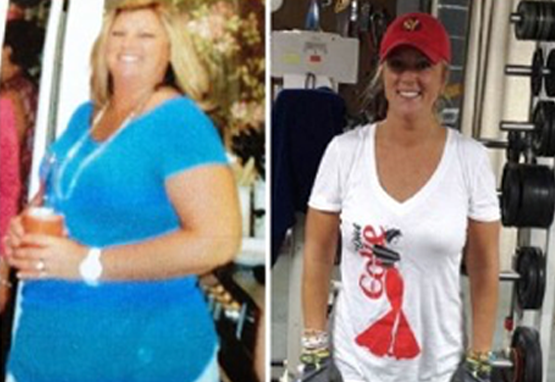
Proper fat reduction depends on the type of exercise that is performed, how it is executed, and the exercise duration. Proper fat reduction also depends on what you eat before and after your exercise session. The nutritional density of the food and the timing of when and when not to eat is extremely important. If you are legitimately hungry, you are doing something wrong – GET ASSISTANCE. If your exercise is not producing a stronger body and more youthful look – GET ASSISTANCE. Do not get sidetracked by nonsense you read in such publications as Time Magazine and the New York Times. This is not the time to abandon common sense and hard work. These two attributes will always produce positive, healthy results.
The editor of this paper is a passionate advocate of healthy living. She is honest and educated. A good laugh is good for your health, and good advice is also good for your health. Read material such as in the New York Times for the laugh and New Living for your health, and you’ll get the best of both worlds. Remember…if you live strong, you will prosper because – LIFE IS A SPORT, TRAIN FOR IT!
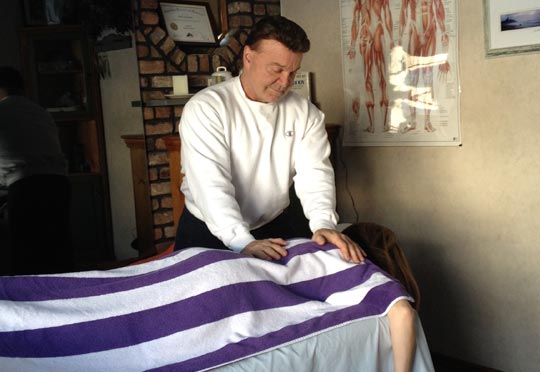
John Boos is a two-time Mr. World/Mr. NY State champion certified by the NSCA. He is a licensed massage therapist, a certified medical exercise specialist and is ACE-certified. He heads “John Boos One-on-One Strength, Fitness and Massage” based in Babylon, NY. He hosts “John Boos One-on-One Fitness” radio show Sundays at 7 am on 101.5 in Nassau County and 105.3 in Suffolk County.
|